Ujala Smart Digital School Network
A Modern Educational Solution for Rural & Underserved Areas of Pakistan

About the Project:
Ujala Educational Network (UEN) is introducing an innovative educational model called the:
Ujala Smart Digital School Network:
This project aims to provide quality education to students living in rural, remote, underserved, and educationally disadvantaged areas of Pakistan where qualified teachers and modern educational facilities are limited or unavailable.
The project combines:
Online teaching
Smart classroom technology
Centralized quality education
Local classroom supervision
Digital learning systems
so that children in villages and remote communities can receive high-quality education from experienced teachers through modern technology.
Vision
To ensure that every child in Pakistan, regardless of location or financial background, has access to quality, affordable, and modern education.
Mission
Our mission is to use technology and digital learning systems to solve the shortage of qualified teachers in rural and underdeveloped areas by creating smart digital classrooms connected to expert teachers through online education.
The Problem We Aim to Solve
Many rural and remote areas in Pakistan face serious educational challenges, including:
- Lack of qualified teachers
- Weak educational systems
- Limited access to quality schools
- Poor English and computer education
- Lack of science and mathematics teachers
- High educational inequality between urban and rural areas
- Limited opportunities for girls’ education
- Financial barriers for low-income families
As a result, thousands of children are unable to receive modern and competitive education.
Our Smart Digital School Model
The Ujala Smart Digital School Network introduces a modern classroom system where:
In the Classroom
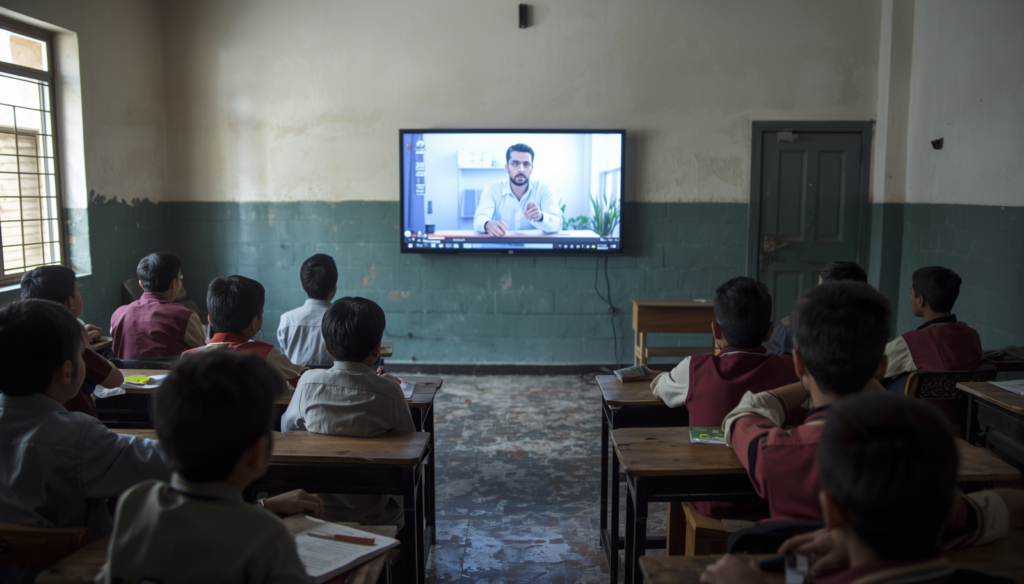
Students sit physically in a classroom environment.
Instead of a traditional teacher standing inside the classroom:
- A LED screen, smart TV, or laptop is placed in front of students.
- Professional teachers conduct live online classes from a central teaching studio.
- Students interact with teachers in real-time.
- A local classroom facilitator/supervisor remains present to guide students and maintain classroom discipline.
This creates a modern hybrid learning environment.
How the System Works
Central Teaching Studio (Main Campus)
At the main teaching center:
- Subject specialist teachers conduct classes.
- Classes are streamed live.
- Smart boards and digital presentations are used.
- Lessons are recorded for backup and revision.
Smart Classroom Setup (Remote Areas)
Each classroom includes:
- LED TV / Smart Screen / Projector
- Laptop or Mini PC
- Internet connection
- Speaker & microphone
- Whiteboard
- Student desks and chairs
- Local classroom facilitator۔
Role of the Local Classroom Facilitator
The facilitator is not the main teacher but supports classroom operations.
Responsibilities include:
- Maintaining attendance
- Helping students during class
- Managing discipline
- Communicating with online teachers
- Assisting with homework and activities
- Technical support during online sessions۔
Educational Programs:
The project can offer:
School Education:
- Primary classes
- Middle classes
- Secondary classes
- Matric preparation۔
Skill Development Programs:
- Computer education
- Freelancing awareness
- Spoken English
- Graphic designing
- Digital literacy
- Online learning skills۔
Girls Education & Empowerment:
Special focus will be given to:
Girls’ education
Women empowerment
Safe learning environments
Skills and vocational learning۔
Key Benefits of the Project
Quality Education in Remote Areas:
Students in villages and underserved areas can learn from experienced teachers.
Solving Teacher Shortage:
One expert teacher can teach students in multiple locations simultaneously.
Affordable Education:
The system reduces operational costs while improving educational quality.
Equal Learning Opportunities:
Children in remote areas receive education comparable to urban students.
Better Monitoring & Quality Control:
Centralized management helps maintain teaching standards.
Support for Girls’ Education:
The model can help increase access to education for girls in conservative or remote communities.
Technology Used
The project may use:
- Zoom Classes
- Google Meet
- Learning Management Systems (LMS)
- Smart Boards
- Recorded Video Lectures
- Educational Apps
- AI-based learning tools۔
Recorded Backup Learning System:
In areas with weak internet connectivity:
- Recorded lectures can be played.
- Lessons can be downloaded in advance.
- Offline educational content can be used.
This ensures continuous learning even during connectivity issues.
Community Impact:
The project aims to:
- Improve literacy rates
- Reduce educational inequality
- Support youth development
- Increase digital awareness
- Promote peaceful and educated communities
- Create future employment opportunities۔
Future Expansion Goals:
Ujala Educational Network plans to expand this system across:
- Rural Sindh
- Interior Sindh
- Balochistan
- South Punjab
- Remote communities across Pakistan
with the long-term goal of building a nationwide smart digital school network.
Potential Partnerships:
The project may collaborate with:
- NGOs
- Educational institutions
- CSR programs
- Telecom companies
- International donors
- UNICEF
- UNESCO
- Community organizations
for educational development and digital learning initiatives.
Why This Project Matters:
Education is the foundation of social development and national progress.
The Ujala Smart Digital School Network is designed to:
- Bridge the education gap
- Deliver quality learning to underserved communities
- Create affordable and scalable education solutions
- Prepare youth for the modern world
through technology-driven education.
Join Our Mission:
We welcome:
- Educational partners
- Volunteers
- Donors
- Social workers
- Teachers
- NGOs
- Community leaders
- Technology partners
who want to support educational development in Pakistan.
Contact Information:
Ujala Educational Network (UEN)
🌐 ujalaedunet.net 📧 info@ujalaedunet.net
Together, we can bring quality education to every child, everywhere.
 Online | Privacy policy